Postpartum Hair Loss Solutions: Why It Happens and How Toppers Can Help
You are tired, you are busy, and now there is hair in the shower drain. If that sounds familiar, you are not alone. Postpartum hair loss is one of the most common changes new moms notice, and it can feel overwhelming. At Innovative Hair Solutions, we talk with new moms about this every week. The good news is that it is usually temporary, and there are simple, gentle options to help you feel like yourself while your hair recovers.
In this guide, we’ll cover postpartum hair loss solutions, from why shedding happens to how long it lasts. We’ll also explain how a hair topper can help. If you’d like to see everything we offer, visit Innovative Hair Solutions anytime.
Key Takeaways
- Postpartum hair loss is common and usually temporary, caused by hormone changes after birth.
- Shedding typically starts two to four months after delivery and often eases within 6 to 12 months.
- Gentle styling and hair care can protect fragile new growth.
- A hair topper offers instant coverage and volume while your hair regrows.
- See a doctor if shedding is severe or lasts longer than a year.
Why Does Postpartum Hair Loss Happen?
Postpartum hair loss happens because of a sharp drop in hormones after delivery. During pregnancy, high estrogen levels keep more hairs in the growing phase. As a result, your hair often feels thicker than usual. After birth, estrogen falls quickly. Consequently, many of those extra hairs move into the shedding phase at the same time.
Doctors call this temporary shedding telogen effluvium. In simple terms, it is your hair catching up after pregnancy. It is not a sign that something is wrong with you.
Is Postpartum Hair Loss Normal?
Yes, it is very normal. In fact, many new moms notice more hair in the brush, on the pillow, or around the baby’s nursery chair. Seeing clumps can feel scary. However, this kind of new baby hair shedding is usually part of the body’s recovery. That said, please talk with your doctor if shedding is extreme, comes with other symptoms, or lasts beyond a year.
Postpartum Hair Loss Timeline
Knowing what to expect can make the process feel less stressful. Here is a simple timeline.
When Does Postpartum Hair Loss Start?
Most women notice shedding about two to four months after giving birth. Often, it peaks around month four. Every body is different, so a slightly earlier or later start is still normal.
How Long Does Postpartum Hair Loss Last?
For most women, shedding slows down within a few months. Then, hair gradually returns to its usual fullness, often within 6 to 12 months after delivery. Breastfeeding does not cause hair loss, but hormone shifts after weaning can sometimes bring a second round of shedding.
Does Postpartum Hair Loss Grow Back?
In most cases, yes. As your hormones settle, new hair grows in. You may spot short baby hairs along your hairline first. Although they can look unruly at first, they are a great sign of regrowth.
Where Postpartum Thinning Shows Up First
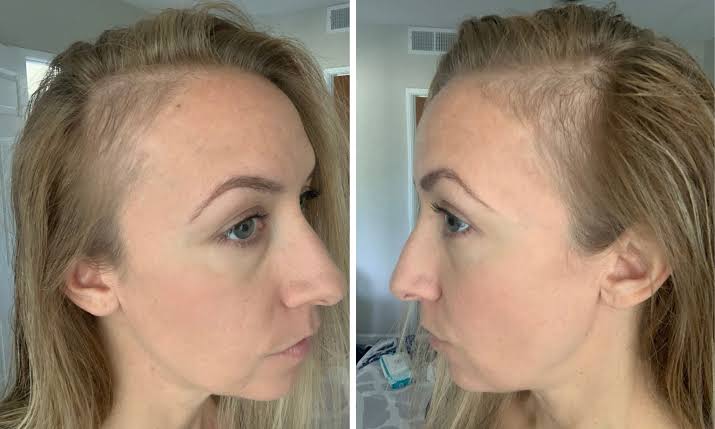
Postpartum thinning often appears along the hairline and at the temples first. Many moms also notice a wider part or less volume at the crown. Meanwhile, shedding can feel more noticeable while breastfeeding simply because you are paying closer attention to your hair. Spotting where thinning happens helps you choose the right solution, which we’ll cover next.
Worried About Thinning Hair After Baby?
Postpartum Hair Loss Solutions That Actually Help
While your hair recovers, a few small changes can make a big difference.
How to Hide Postpartum Hair Loss
Try a deeper side part, soft layers, or a light volumizing mousse. These tricks add fullness without stress on your hair. For thinning at the crown, our guide on how to hide thinning hair on the crown shares more ideas.
How to Style Thinning Hair After Pregnancy
Keep styles simple and low-maintenance. Loose waves, half-up styles, and soft braids look polished with little effort. Above all, avoid tight ponytails and heavy heat, since new growth is fragile.
Gentle Hair Care for New Moms
Use a mild shampoo, a wide-tooth comb, and cool or lukewarm water. Also, let your hair air-dry when you can. These small habits help protect hair while it regrows.
Can a Hair Topper Help With Postpartum Hair Loss?
Yes, it can. A hair topper is a small hairpiece that clips onto the top of your head. It adds instant coverage and volume exactly where you need it. Because it blends with your own hair, it looks natural. Our cosmetic hair additions include toppers in a range of colors, lengths, and textures, so your stylist can match your hair closely.
Best of all, a topper is not a permanent commitment. Think of it as a comfortable bridge while your hair regrows. To see how toppers work in real life, read how a topper can instantly transform your look.
Are Hair Toppers Comfortable for Everyday Wear?
Yes. Modern toppers are lightweight and breathable, so most women forget they are wearing one. Our stylists will fit your topper so it sits securely and feels comfortable all day.
Can You Wear a Topper While Breastfeeding?
Yes. A topper sits on top of the head, so it does not get in the way of nursing. Since babies love to grab, ask your stylist about secure clips. Also, remove your topper at home to give your scalp a rest.
Hair Topper vs Wig vs Extensions for Thinning Hair
Not sure which option fits best? Here is a quick comparison. For a deeper dive, check out Toppers 101.
- Hair topper: Best for thinning at the crown, part, or temples. Clip-in toppers are easy to wear and remove.
- Wig: Best for widespread thinning or full coverage. Wigs change your whole look.
- Hair extensions: Best for adding length and volume when you still have enough natural hair. They are less ideal for noticeable thinning.
In short, a human hair topper is often the most comfortable choice for women with postpartum thinning in specific areas.
Feeling Self-Conscious About Postpartum Hair Loss?
Many moms tell us the same thing. They feel tired, and they miss looking like themselves. First, know that your feelings are valid. Second, remember that this phase is temporary. Even small steps, like a fresh part, a gentle routine, or a well-fitted topper, can bring back a little confidence. Taking care of your hair is a simple form of self-care, and you deserve it.
You Deserve to Feel Like Yourself Again
Frequently Asked Questions
Is postpartum hair loss normal?
Yes. Postpartum hair loss is very common and usually temporary. Hormone levels shift after delivery, which causes extra hairs to shed at once. Most women see their hair return to its usual fullness within about 6 to 12 months. See a doctor if shedding is severe or lasts longer.
When does postpartum hair loss start?
Postpartum hair loss typically starts about two to four months after giving birth. Shedding often peaks around month four, then slowly eases. Timing varies from person to person, so a slightly earlier or later start is still within the normal range.
Does postpartum hair loss grow back?
Yes, in most cases. Postpartum shedding is a temporary phase, and new hair grows in as your hormones settle. Many women notice short baby hairs along the hairline within a few months. If regrowth doesn't appear within a year, check in with your doctor.
Can a hair topper help with postpartum hair loss?
Yes. A hair topper adds instant coverage and volume to thinning areas, such as the crown, part, or temples. It clips on and comes off easily, so it works well while your own hair regrows. A stylist can match your color, texture, and length.
How to hide postpartum hair loss?
Start with a deeper side part, soft layers, and volumizing products. For thinning at the crown or temples, a clip-in hair topper gives the most natural coverage. Gentle styling also protects fragile new growth, so avoid tight ponytails and heavy heat.
Let Us Help You Feel Like Yourself Again
Postpartum hair loss is temporary, but your confidence matters right now. At Innovative Hair Solutions, we help new moms find gentle, natural-looking solutions every day. Whether you want advice, a topper fitting, or simply someone to listen, our team is here for you. Please contact us to book your free consultation, and let’s find the right fit together.